Broken Arrow storm shelter guide
What to Expect When a Storm Shelter Is Installed in Broken Arrow
Most storm shelters go in faster than people expect. Here’s what happens before, during and after install day for the three most common types in Broken Arrow, so you know what to plan for and what to ask.
Before install day
- Pick the spot: the shelter everyone can reach fastest from where they sleep and spend evenings.
- Check the rules: ask about a city permit, and check HOA rules if you have an HOA and the shelter will show from the street.
- Utility marks: any digging in Oklahoma starts with a free OKIE811 request so buried lines get marked. Installers often place it, but ask.
- Rebate first: if you’re applying for the SoonerSafe rebate, wait until you’re selected. Shelters installed before selection don’t qualify.
- Clear the way: empty the corner of the garage, or make sure equipment can get through the yard gate.
Garage floor shelter
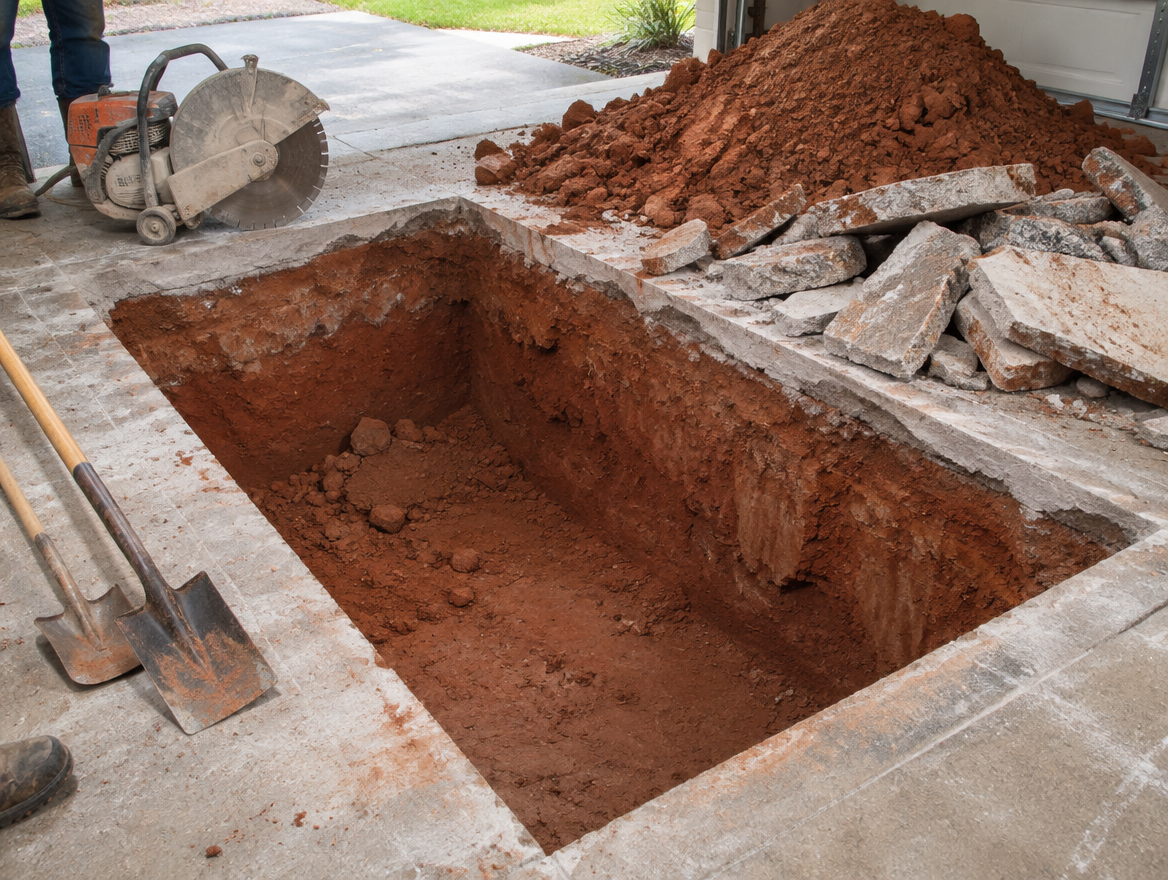
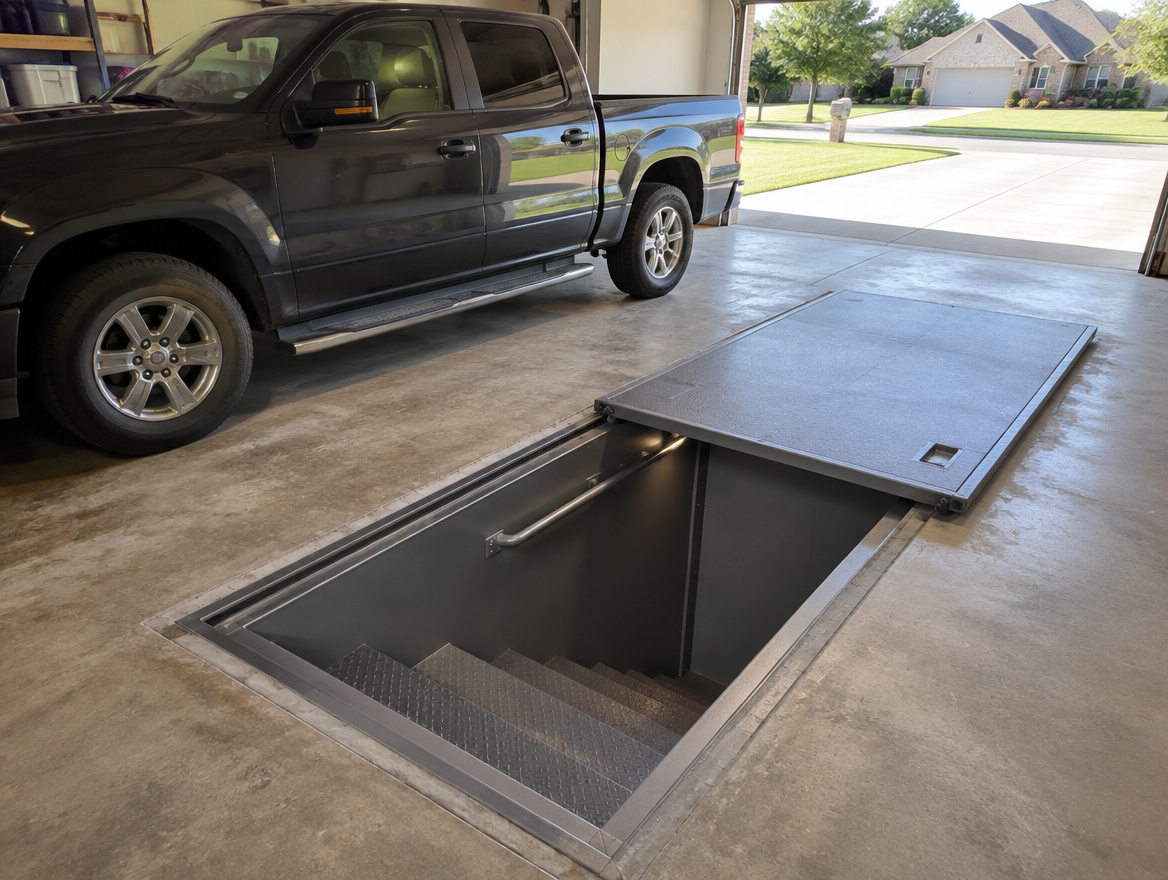
The crew marks the spot, often beside where one car parks, and saw-cuts a rectangle out of the slab. The concrete is broken out and the hole is dug to depth. The steel unit is lowered in, leveled and locked in place with new concrete poured around it. Most are done in a day. The fresh concrete then needs time to cure, so ask how long before a car can roll over it. Expect dust and noise from the saw. See garage floor shelters.
Above-ground safe room
The unit arrives in one piece or in panels. It’s set on the slab, holes are drilled into the concrete and the room is bolted down with heavy anchors. The installer checks that the door swings and latches cleanly from inside. This is often the quickest install, sometimes just a few hours, and there’s no digging. See above-ground safe rooms.
Underground yard shelter
An excavator digs the hole, which can take longer in heavy clay or where rock turns up. The steel or concrete shelter is set in, sealed and backfilled, and the ground is shaped so rain runs away from the door. Expect a muddy patch of lawn for a while. See underground storm shelters.
The walkthrough
Before the crew leaves, climb in and close the door yourself. Make sure everyone who will use it can open and close it from inside, that vents are clear and that the latch feels solid. Ask how to clean and care for the door track or hinges.
Paperwork to keep
- The model name and the standard it’s built and tested to, such as FEMA P-361 or ICC 500
- The written warranty from the maker and the installer
- The installer’s signed certificate of installation, which the SoonerSafe program asks for
- Your receipt and any permit papers
Right after install
Add the shelter to the City of Broken Arrow’s shelter registry so responders know where to look after a storm. Then stock it: water, a flashlight, a whistle, a phone charger, shoes and any medicine your family needs. Walk everyone through the plan so nobody has to think when the sirens go off.
More guides
- How Much Does a Storm Shelter Cost in Broken Arrow, OK?
- SoonerSafe Storm Shelter Rebate: What Broken Arrow Homeowners Need to Know
- How to Register Your Storm Shelter in Broken Arrow
- In-Ground vs. Above-Ground Storm Shelters: Which Is Right for You?