Shelter inside the house
Most tornado warnings in Broken Arrow come with some notice, but the worst ones come at night, in heavy rain and hail. An indoor safe room means nobody has to go outside or into a dark garage. You walk down the hall, step into the closet and shut a steel door.
Indoor safe rooms are built two ways. One is a steel room assembled inside an existing closet or small room and anchored to the slab. The other is a room built into the house itself, with reinforced walls, a reinforced ceiling and a tested door, which is easiest to do while a home is being built or remodeled.
Good places for an indoor safe room
- Master or hall closet. Close to the bedrooms, which matters for storms at night. It still works as a closet.
- Under the stairs. Space that often goes unused. Shape and headroom set the size.
- Laundry or utility room. Usually on the slab and on an inside wall.
- Interior room on the ground floor. Away from outside walls and windows.
The room needs to sit on a concrete slab that can take the anchors. Homes on a crawl space or pier and beam may need a new footing, or a different shelter type.
Building a safe room into a new home
If you’re building in Broken Arrow, ask your builder about a safe room before the slab is poured. It’s much simpler and cheaper to plan a reinforced room into the design than to add one later. FEMA publishes free safe room plans (FEMA P-320) that builders can work from, and OSU Extension points homeowners to them.
What makes it a real safe room
A closet with a solid door isn’t a safe room. A tornado safe room has walls, ceiling, door, hinges, locks and anchors that were designed and tested together to stand up to tornado winds and debris. Ask for proof that the design meets FEMA P-361 and ICC 500, and ask who tested it. If you plan to apply for the state rebate, the installer must sign a certificate saying it meets those standards. See our SoonerSafe guide.
Bed and furniture shelters
You may see shelters built into bed frames or cabinets. Ask the same questions about testing and anchoring before you buy one. A shelter that isn’t anchored or tested to the standards may not hold up in a strong tornado.
Compared with other shelter types
An indoor safe room is the most convenient option, especially at night. It takes up space inside your home and can cost more if walls and finishes have to be reworked. A garage floor shelter or a garage safe room often costs less because there’s no finish work. See our in-ground vs. above-ground guide.
It still works as a closet
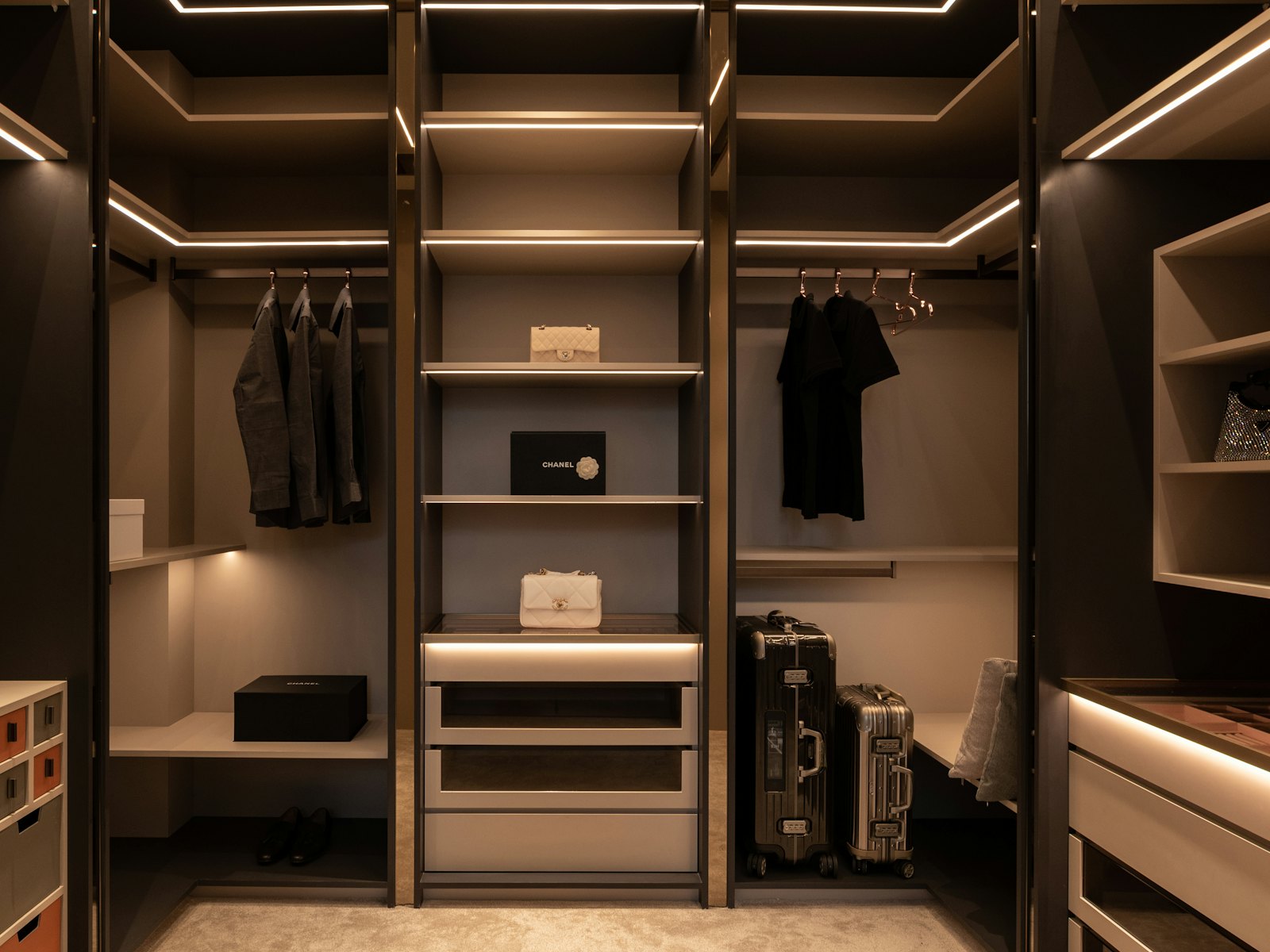
Most families who add an indoor safe room keep using the space every day. Shelves and rods can be mounted inside, as long as they don’t block the door or take up the floor space people need during a storm. Lighting can run off a battery or a normal outlet. Ask the installer what can be attached to the walls without affecting the anchors or the testing. A plain steel interior can be painted to match the rest of the room, and a normal-looking door trim can go around the steel frame.
Keep a small storm kit on a shelf inside: water, a flashlight, a weather radio, shoes, a whistle and any daily medications.
Cost
National cost guides put above-ground shelters at about $3,000 to $12,000 or more. Building a safe room into a home as an addition can run $90 to $210 per square foot. Retrofit work like drywall, trim and paint adds to the price. See our cost guide.
Talk to a local installer
Call (918) 317-0623 and we’ll connect you with a local installer who can look at the room you have in mind, check the slab and quote the job.
Common questions
Can any closet become a safe room?
Only if it sits on a slab that can take the anchors and has room for the shelter. The installer will check the floor, walls and doorway before quoting.
Is a closet safe room safe at night?
That’s one of its biggest advantages. You don’t have to go outside or into the garage in the dark. A safe room near the bedrooms is the fastest to reach.
Can I add a safe room while building a new home?
Yes, and it’s the easiest time to do it. Ask your builder before the slab is poured. FEMA P-320 has free safe room plans.
Are bed shelters safe?
Ask whether the product is anchored and tested to FEMA P-361 and ICC 500, and who did the testing, before you buy.